Technology
The Scientific Breakthrough Behind 3WAVES
Understanding how vestibular stimulation transforms simulation training.
The vestibular system is the body's sophisticated balance control center, managing coordination and spatial awareness through three critical inputs:
What you see
Vestibular signals
Physical sensation
This system works flawlessly in normal conditions, but becomes unreliable when there's a mismatch, such as seeing motion in a simulator without feeling it. That's when cybersickness strikes.
Extended reality opened incredible training possibilities at accessible costs, but with one major limitation: it only engages your visual system.
This creates oculo-vestibular decoupling -- your eyes see movement your body doesn't feel, triggering nausea, fatigue, and shortened training sessions.
For defense and aviation training, where session duration and trainee comfort directly impact readiness, this limitation has been a significant barrier to XR adoption.
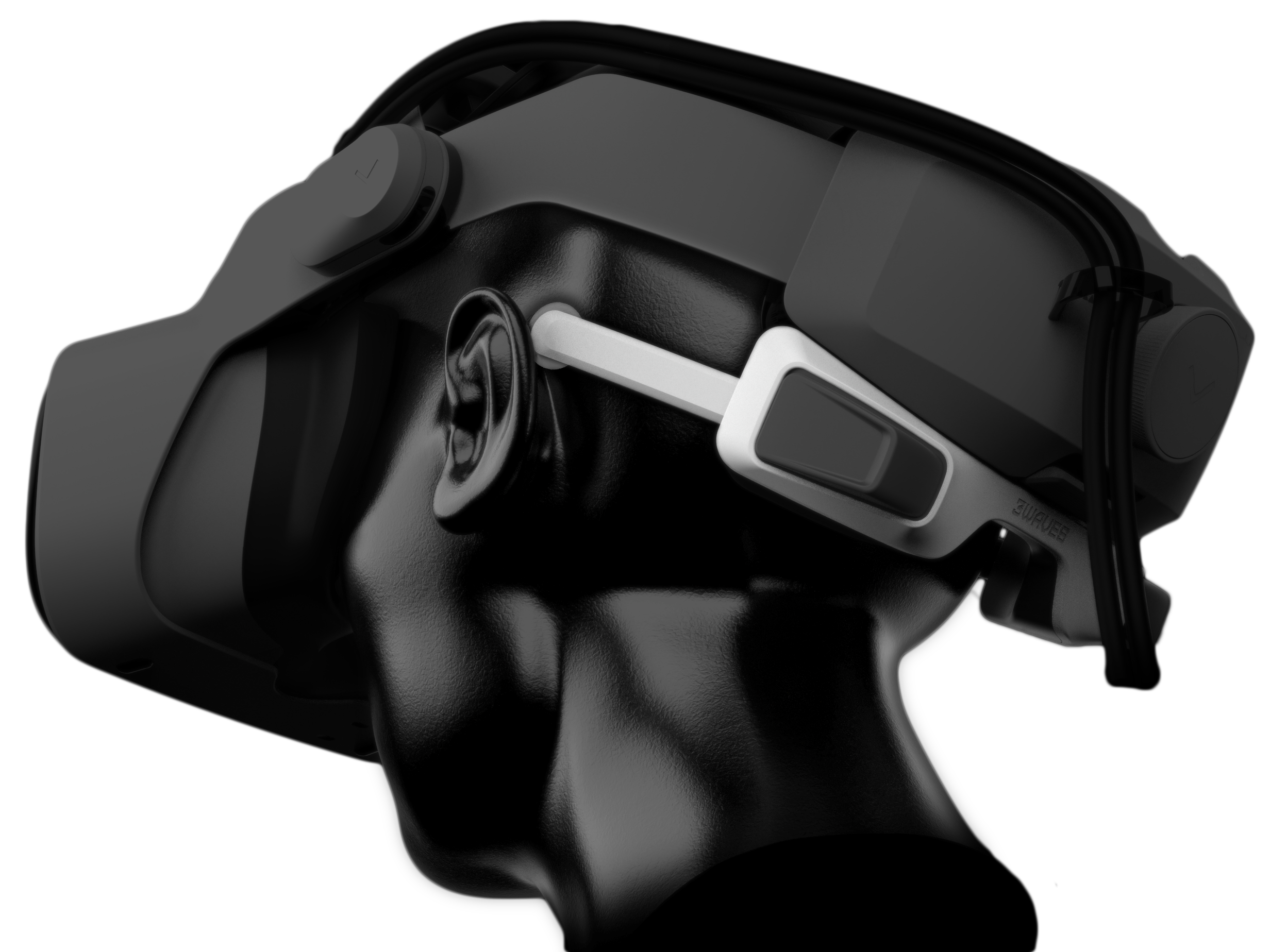
Our technology solves this fundamental mismatch by providing the missing vestibular input, creating harmony between what trainees see and feel.
The result is extended, comfortable, and realistic training that actually improves performance across flight, maritime, and crew simulation scenarios.
Reduced cybersickness means longer, more productive training time.
Skills developed with vestibular feedback transfer more effectively to real-world operations.
Works with any XR headset and simulation platform. No infrastructure changes needed.
Epidermal electrodes provide safe, comfortable vestibular stimulation with no side effects.